SNOW REMOVAL MARKETING · ORIGINAL IAM GUIDE
Sell Seasonal Contracts Before the First Storm: A Fall-to-Winter Sales Calendar
A month-by-month sales calendar for snow removal companies: when to quote, follow up and close seasonal contracts so your routes fill before the first storm.
Part of Snow contract marketing.
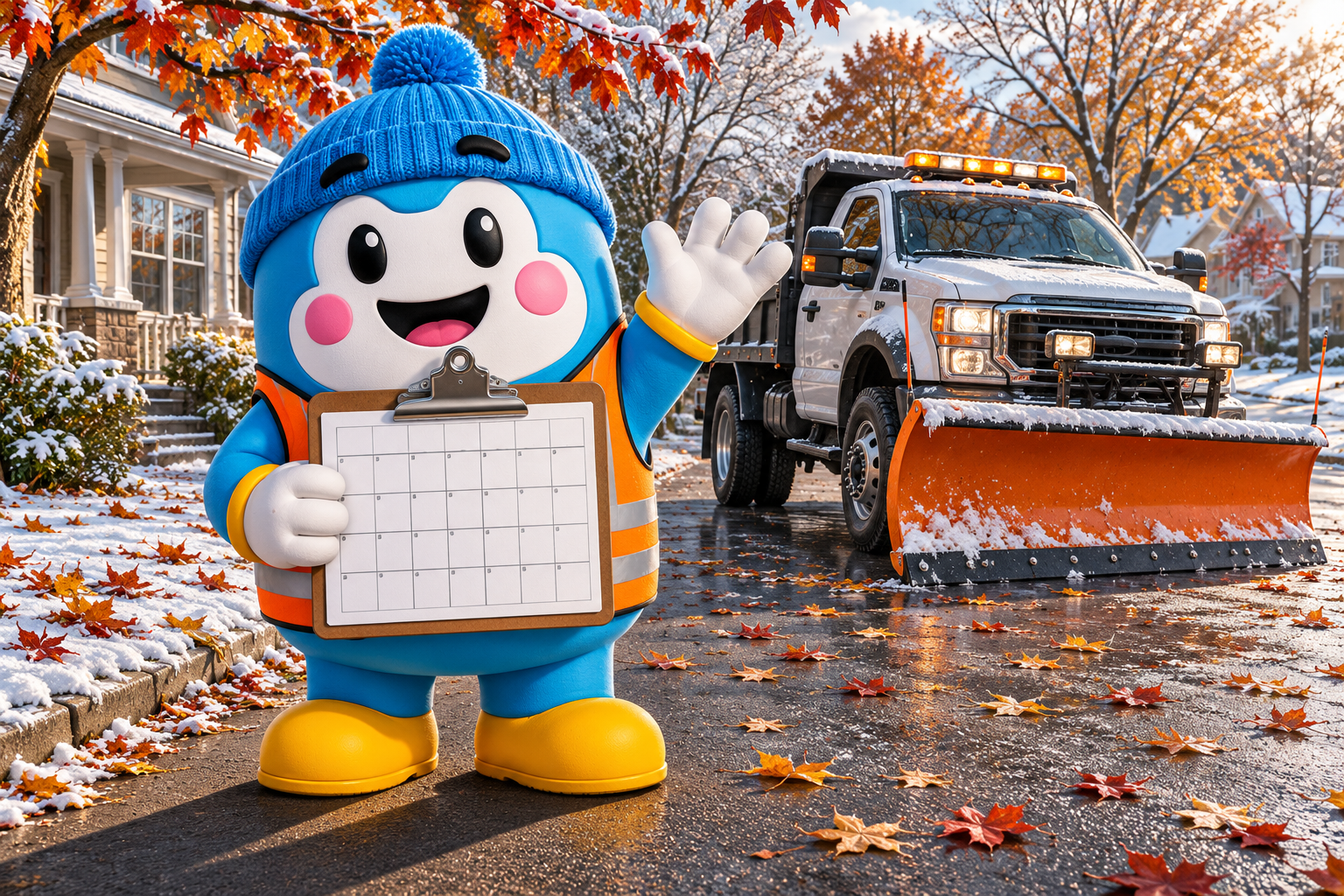
Plan the sales season before routes fill
Most snow removal companies sell the wrong way round. They wait for the first big storm, the phone lights up, and they spend the busiest week of the year quoting strangers instead of clearing lots. The customers who call during a storm want service today, they compare three companies at once, and many of them disappear when the snow melts.
Seasonal contracts fix that. A customer who signs in October has already decided. You know where they are, you can plan your route around them, and you get paid whether it snows twice or twenty times. The trick is timing. Here is a calendar that works for most Canadian markets, with notes for the Lower Mainland, where snow is less predictable and customers need more convincing.
September: Build the list
Before you sell anything, know who you are selling to.
- **Last year's customers.** Export every name, address and service from last season. Mark who paid on time, who complained and who you would rather not keep. - **Route gaps.** Look at a map of your current routes. Where are the empty stretches between stops? Those streets are your best targets, because every new stop there adds revenue without adding much drive time. - **Commercial and strata leads.** Property managers start budgeting for winter in late summer. Write down every strata building, plaza and office park inside your service area.
October: Renewals first, then new quotes
Send renewal offers to the customers you want back in the first week of October. Give them a reason to sign early: a small discount, a locked price, or priority placement on the route. Many companies set a renewal deadline about two weeks out so the decision does not drift.
Once renewals are moving, start quoting new customers on the gaps you found in September. Door hangers and yard signs work best on the streets next to your existing customers, because neighbours can see your trucks on the first storm.
Early November: Close and confirm
By early November, follow up every open quote by phone or text, not just email. A short message like "We have two spots left on your street this winter" is honest when it is true, and it works because route density really does limit how many stops you can take.
Confirm every signed customer in writing. Your contract should spell out the trigger depth (how much snow before you come), what areas you clear, whether salt or ice melt is included, and what happens with extra visits. Clear terms now prevent arguments in January.
Late November: Marketing for the waitlist
When your routes are full, keep marketing anyway, but switch the message to a waitlist. People who join a waitlist in November become your easiest sales next fall, and some will move up if a customer cancels mid-season.
December to February: Service is the sales pitch
Once the season starts, your trucks are your advertising. Take photos of cleared driveways and lots (with permission), post short updates on storm days, and ask happy customers for a Google review after the first big clear. Good winter service is what makes October renewals easy.
March: Ask for next year
The best time to ask for next season is right after a good one. Send a thank-you note at the end of the season with an early renewal offer. Customers who renew in March are customers you do not have to chase in October.
Why seasonal contracts beat per-visit work
Per-visit customers can be profitable, but they make planning hard. You do not know who will call, so you cannot build tight routes. Seasonal customers let you plan priority routes that finish within a predictable window after a storm, and you can serve per-visit customers first come, first served or when they sit close to an existing route. That mix keeps crews busy without overpromising.
A note on safety and coverage
Customers increasingly ask whether your crews are covered. In BC, WorkSafeBC coverage and a current liability certificate are easy proof that you run a real business. Keep both ready to send with every commercial quote.
Quick checklist
- September: list last year's customers and map route gaps - October: renewals in week one, new quotes after - November: close, confirm in writing, start a waitlist - Winter: photos, reviews, steady communication - March: thank-you and early renewal offer
Use this in your next review
Choose one early outreach deadline, one quote follow-up date and the last day you can confirm extra route capacity.
Keep the next step useful
Snow contract marketing framework · Reviewed North American market briefs
Related guides: The morning after the first plow: A checklist for property managers · Prepare a useful proof pack for commercial snow enquiries
Source context and further reading
These pages are original IAM marketing analysis. Platform references below provide context; the illustrative business examples are not published customer results.
Google: AI features and your website · Google: link best practices · Google: spam policies

Turn the guide into a reviewable marketing brief.
Tell IAM what you offer, where you actually work and who should receive the enquiry. Agree the content, technical work and reporting before the campaign starts.
Discuss snow removal marketing ↗