SNOW REMOVAL MARKETING · ORIGINAL IAM GUIDE
Turn snow project photos into a useful case study—with permission and context
Choose permitted snow project photos, verify the story they support and publish a clear case study without inventing results or exposing private details.
Part of Snow Removal Content Strategy.
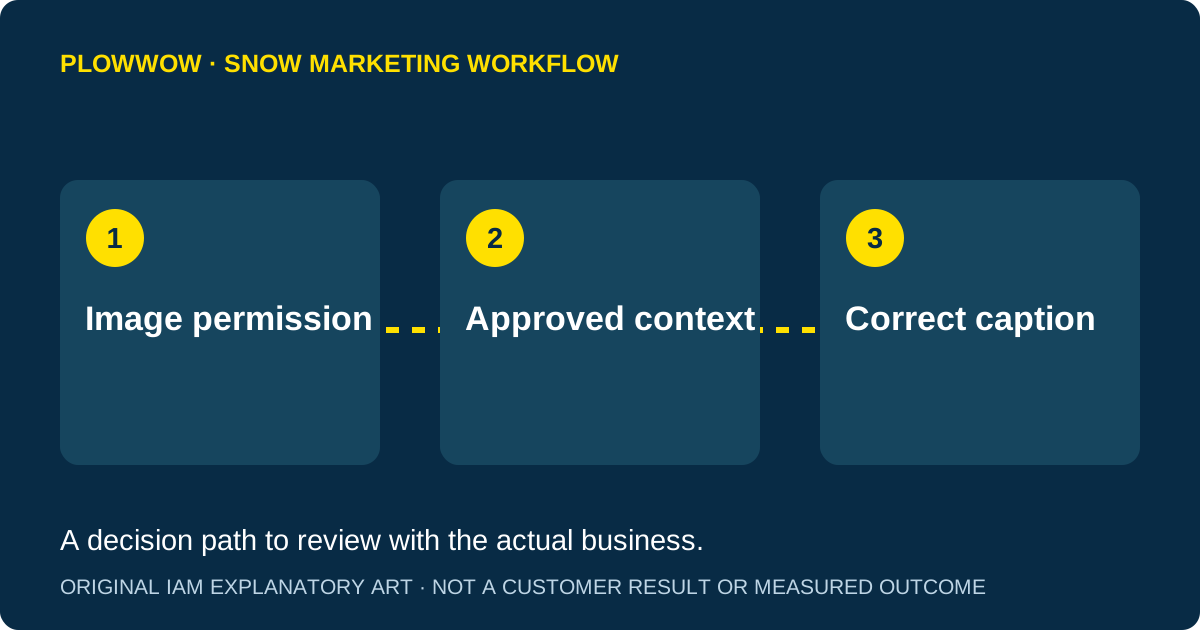
Choose the story before choosing the biggest image
A strong project photograph can help a prospective customer understand the work. It can also be misleading when it is separated from its context. For snow removal marketing, start by deciding what the supplied material genuinely demonstrates: a type of surface, an access constraint, a documented stage of work or a method the business can explain.
Do not begin with a dramatic claim and look for an image that seems to support it. A cleared walkway does not establish how quickly the team arrived, the treatment quantity or the customer’s satisfaction. Those are separate claims that require their own evidence and permission before they become part of a public story.

Confirm who can approve the material
Ask the business who took the photographs and whether it has permission to use them for this purpose. Confirm the intended publishing destinations rather than assuming a message sent for internal review covers every website and social account. Where a client name or recognisable property is part of the story, establish what the business is authorised to disclose.
This is a practical editorial checklist, not a legal opinion about ownership or privacy. If rights or approvals remain uncertain, hold the affected material and choose a permitted alternative. Do not remove identifying details and assume that this automatically resolves every permission question.

Inspect the frame as well as the subject
Before selecting an image, look for faces, vehicle registrations, unit references, access arrangements and documents visible in the background. Some details may have nothing to do with the service story. Ask whether they should be shown and keep the review focused on what is necessary to explain the work.
Keep an untouched source copy and identify the edited publishing version. If a crop would remove essential context, use another image. Where an illustration or reconstruction is needed, label it clearly; do not present generated snow, changed equipment or a modified surface as authentic evidence of a completed job.

Build the article around confirmed observations
Use a clear structure: the agreed public context, the work documented in the material, the practical decision readers can understand and the contractor’s enquiry route. Invite the business to check the factual description before publication. Mark anything still awaiting confirmation instead of quietly converting a working note into a fact.
A suitable caption might describe a photograph as “a supplied image showing pedestrian access after the documented clearing stage”. It should not declare an entire property complete when the image covers one area. If before-and-after photographs are used, confirm that they relate to the same relevant area and explain any limitation in the comparison.
Let the case study support a real enquiry
Use the strongest relevant image near the heading, then place additional views beside the explanation they support. A simple diagram can clarify scope without repeating the same photograph. Create a distinct sharing card, retain a credit where appropriate and check that the mobile crop preserves the useful part of the scene.
Finish with the snow contractor’s correct contact route and explain what information a reader should prepare about their own property. Keep an IAM marketing link separately labelled. After publication, check the actual page, image loading and contact links, then report the live URL to the business. A published case study is useful evidence of communication work; it is not proof of new enquiries, improved rankings or a customer endorsement.
Use this in your next review
Review the record, confirm the factual description with the business and test the intended enquiry destination without submitting a lead.
Keep the next step useful
Snow Removal Content Strategy framework · Reviewed North American market briefs
Related guides: Build city pages from real service differences · Explain deicing without promising an outcome you cannot verify
Source context and further reading
These pages are original IAM marketing analysis. Platform references below provide context; the illustrative business examples are not published customer results.
Google: AI features and your website · Google: link best practices · Google: spam policies

Turn the guide into a reviewable marketing brief.
Tell IAM what you offer, where you actually work and who should receive the enquiry. Agree the content, technical work and reporting before the campaign starts.
Discuss snow removal marketing ↗